Vision Therapy
Computer Vision Syndrome includes eye and vision problems related to prolonged near work and computer use. Jalalabad Eye Hospital offers specialized support through a Computer Vision Clinic approach.


Jalalabad Eye Hospital provides clinical support for cataract, cornea, glaucoma, LASIK guidance, vision therapy and paediatric ophthalmology.

The hospital offers a one-stop solution for optical services, helping patients receive assessment, diagnosis and treatment guidance through a coordinated clinical process.
Our services are supported by doctors, paramedical staff and clinical facilities designed for safe and respectful eye care.
Each service is arranged to help patients understand the condition, receive proper screening and choose the right care pathway.
Cataract is clouding of the eye's natural lens. The Cataract Clinic screens, detects, diagnoses and offers procedural correction guidance for cataract patients.
Inherited corneal diseases are often bilateral, symmetric and slowly progressive. The Cornea Clinic supports management of complicated corneal conditions.
Corneal injury may be physical or chemical. Even small contour changes can cause significant visual problems, so timely assessment is important.
Microbial keratitis can be sight-threatening and may present as an ocular emergency requiring careful evaluation and management.
Glaucoma damages retinal nerve fibres and can reduce vision. Patients are screened for glaucoma or possible glaucoma because timely intervention is crucial.
LASIK offers the possibility of spectacle-free vision for suitable patients. It is described as safe, precise and predictable when properly assessed.
Computer Vision Syndrome includes eye and vision problems related to prolonged near work and computer use. Jalalabad Eye Hospital offers specialized support through a Computer Vision Clinic approach.
Amblyopia, or lazy eye, is reduced vision in an eye that has not received adequate use during early childhood. Early attention can help children receive timely care.
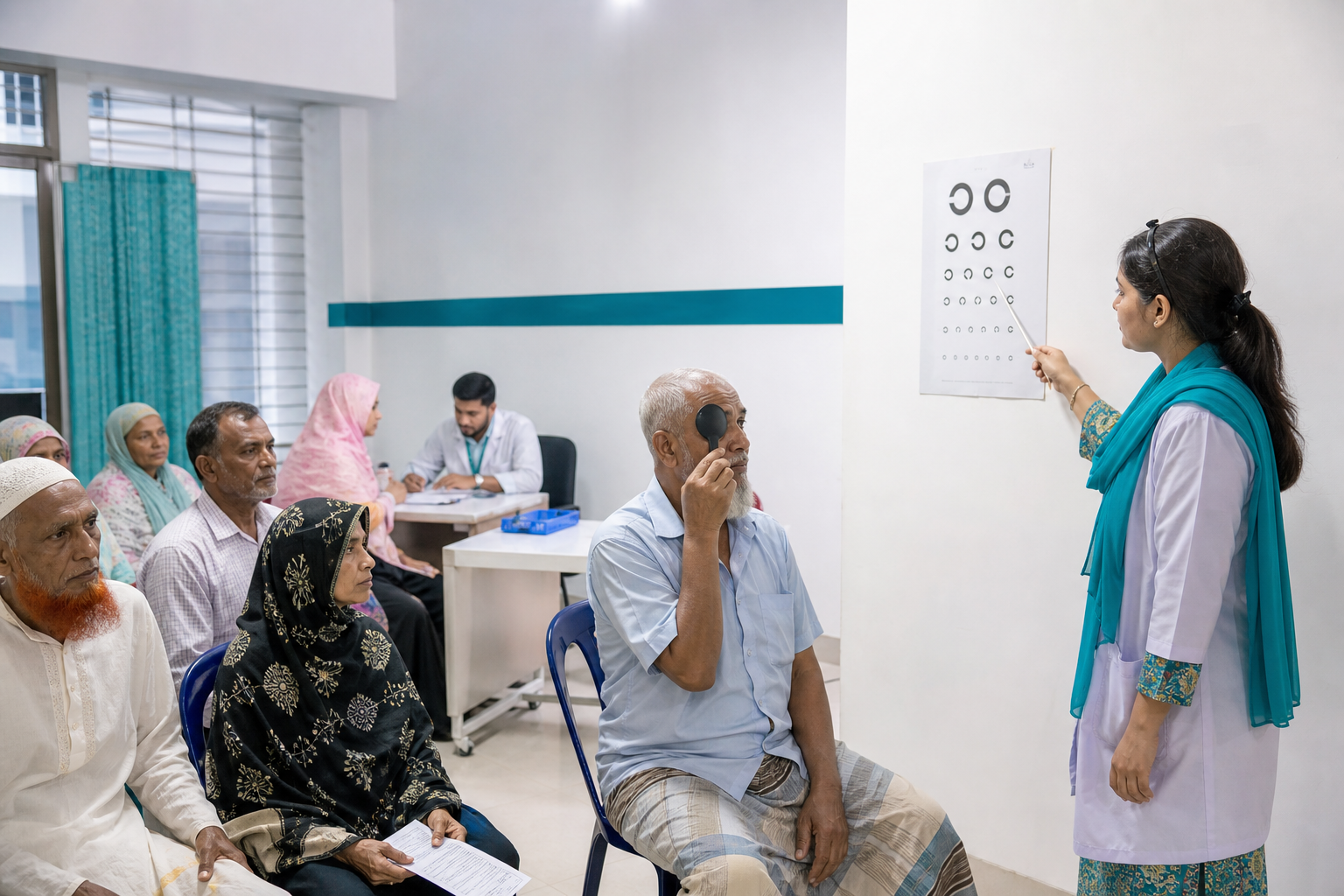
Patients receive guidance for examination, diagnosis, procedural care and follow-up according to their eye condition.
Initial assessment helps identify the condition and urgency.
Clinical examination supports the right treatment decision.
Patients receive advice for treatment, surgery, therapy or follow-up.
Trusted eye care in Sylhet with compassion, clarity and professional excellence.
© All rights reserved Jalalabad Eye Hospital
Developed by: Khushi Infosoft